Home / How to play
Walk a legal pickup, meld and declaration
Indian rummy does not grade style. It grades two sequences, including one pure sequence. This walkthrough stays on that constraint.
The first useful sentence in a rummy how-to is the definition of a legal show. Everything before that is distribution. Everything after that is billing. This note stays in the middle on purpose.
Start from the last card, not from the brand
A how-to that begins with 'download the app' is a distribution note pretending to be a rulebook. This walkthrough begins at the moment you already hold 13 cards and must decide whether a show would be legal.
If you cannot describe a legal show, you are not ready for Points, Deals or Pool. Format choice comes after structure, even though the homepage shows the ledger first for shortlisting readers.
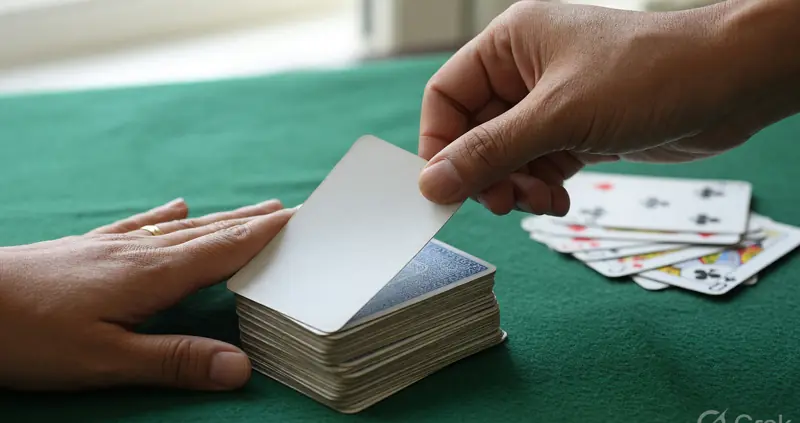
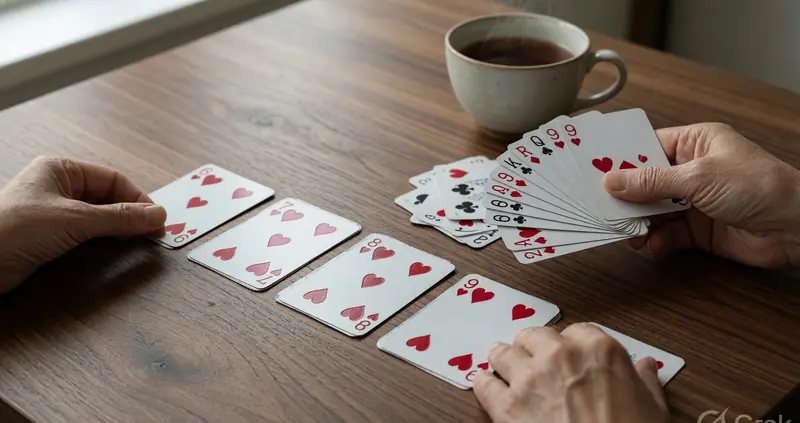
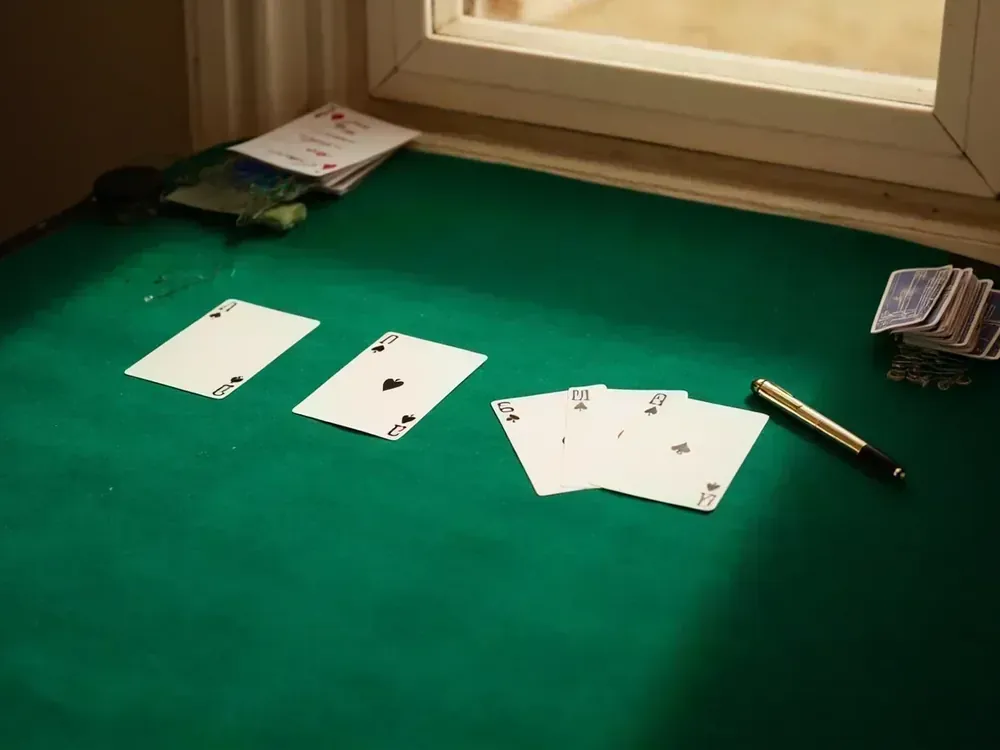
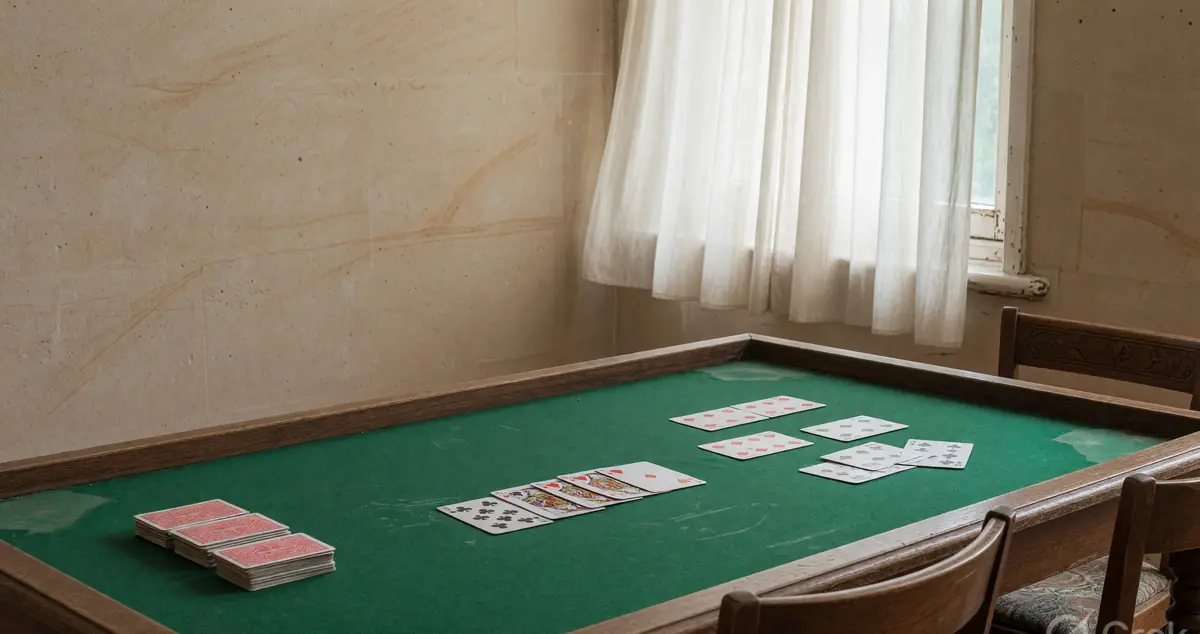
Nothing here is a casinoclub screenshot. The stills are table-level photography used to name objects: discard lip, grouped run, printed joker.
Pickup: public card versus hidden card
The open pile is a sentence everyone can read. Taking it tells the table what you need. That leak is often worth it when the card completes a pure sequence.
The closed deck hides information from everyone, including you. Drawing there is not 'due' after a bad stretch. Teaching rooms treat that feeling as the start of a chase.
Illegal pickups happen when the discard lip is cramped. That is a usability fault. It is also your fault if you tap the wrong stack. Slow down.
The pure sequence is the rent
Pay it first. Three consecutive cards of one suit, no joker. A 5-6-7 of clubs is rent. A 5-6-joker of clubs is not rent in standard teaching rooms.
Readers who collect high sets first often die with pretty deadwood and no run. The still on this note is a run, not a trophy.
If the rest of the hand is ugly but the pure sequence exists, you at least have a legal floor. If the reverse is true, you have decoration.
Sets and the second sequence
A set is three or four of a rank. Jokers may complete it. Whether four of a rank is allowed is a house rule. This desk will not invent casinoclub's house rule.
The second sequence may be impure. That is where the printed joker usually earns its keep. Using both jokers to polish sets while the second sequence is missing is a common invalid show.
Count your groups out loud before you declare. If you cannot name two sequences, you are not ready to tap show.
Discard with a memory of four
You will not remember the whole night. You can remember the last four discards. That window is enough to avoid feeding an obvious run on your right.
Throwing a middle card from a suit you abandoned is often safer than throwing an ace 'because it is high'. High-card fear is not a method.
If you cannot see the last discard clearly, that is the discard-lip problem again. Leave tables that hide the lip.
Declare as a checklist, not a celebration
Select groups. Confirm the pure sequence. Confirm the second sequence. Confirm leftover cards are sets. Then declare.
An invalid show in teaching rooms is often the full 80. That single tap can cost more than a first drop. If the client offers a preview, use it.
This desk has not verified whether casinoclub offers a preview. Absence of a verified preview is not proof that none exists.
First drop and middle drop as emergency exits
A first drop, in many teaching rooms, costs 20. A middle drop after you have seen cards costs 40. Staying into an invalid 80 is the expensive story.
Those three numbers are classroom marks. They recur on the typographic poster because they teach the shape of a decision, not because casinoclub printed them.
If casinoclub uses other numbers, copy those numbers onto a paper slip. Do not carry 20-40-80 into a table that publishes 15-30-60.
Practice without a stake
If a practice table exists, use it to rehearse grouping, not to chase a cartoon coin. This desk has not verified a casinoclub practice mode, so this is advice about your own paper deck as much as about any client.
A physical 52-card deck plus printed jokers will teach the pure-sequence constraint faster than another paragraph.
When the grouping is automatic, return to the format ledger and the jurisdiction gate. Rules fluency is not permission.
Questions readers send
What makes a declaration legal in teaching rooms?
Two sequences, including one pure sequence built without a joker. Remaining cards must sit in sets or a second sequence.
Can a printed joker finish the pure sequence?
No. That is the usual teaching-room rule. A joker can finish the second sequence or a set.
What happens on an invalid show?
Many teaching rooms bill the full count, often 80. casinoclub may differ. Read the table card.
Should I pick from the open pile or the closed deck?
The open card is information. Take it when it completes a planned meld. The closed deck is uncertainty. Neither is a lucky ritual.
Is there a required order for grouping cards?
Group the pure sequence first in your own planning. The client may accept any legal grouping. Planning order is for you, not for decoration.
Does this walkthrough replace the operator help file?
No. It is classroom structure. If casinoclub prints a different grouping rule, the operator file wins.
If you can group a legal show on paper, open the format ledger and the jurisdiction gate. If you cannot, stay here. PLAY NOW will not teach the pure sequence for you.
Illegal shows as billing events, not embarrassments
An invalid declaration is a bill. Teaching rooms often price that bill at a full count. Treating it as a joke is how people tap show to see what happens. Seeing what happens is expensive.
The cheapest prevention is still naming two sequences out loud. If you cannot name them, you are not ready to tap. The client will not be kinder than a paper table.
If a preview exists, use it every time, even when you are sure. Sure is how pretty sets hide a missing pure sequence.
If a preview does not exist, slow the last ten seconds. Speed at the show button is not skill. It is a race against your own grouping error.
House rules can change the price of that error. Until casinoclub prints a number, assume the error is expensive and leave when grouping is unclear.
After an invalid show, the next skill move is a break, not an immediate rebuy to erase the feeling. Feeling is not a clock.
Carry that habit back to the format ledger. A Points table makes the error a short sharp bill. A Pool table can make the same error a knockout. The grouping rule did not change. The clock did.
This is why the walkthrough refuses to start with a download. Distribution does not teach grouping. Grouping teaches whether a download is even relevant.
If you want more practice, return to the paper deck. Another paragraph will not move your fingers.
A paper-deck drill that does not need a client
Deal 13 from a physical deck plus two jokers. Ask only whether a legal show exists. If not, name the missing piece: pure sequence, second sequence, or leftover set.
Take the open card that completes the pure sequence even if a prettier set is available. The drill is rent first.
After ten deals, count how often you almost declared without a pure sequence. Clients make the same error faster because the show button is closer.
A second drill: discard from a suit you abandoned even when a high card in a live suit feels scarier. High-card fear is not a grouping rule.
A third drill: name the last four discards without looking. If you cannot, slow down. Speed is not part of legality.
When the drills feel automatic, return to the format ledger. Rules fluency is not a seat.
Where house rules usually hide
Printed versus wild jokers, four of a rank, wraparound ace sequences, and whether a first drop survives a closed-deck touch. This desk will not invent casinoclub answers.
If a help file exists, read those four lines before the first stake. If not, treat unusual grouping as expensive until a preview says otherwise.
Invalid-show billing is the fifth hiding place. Teaching rooms often use 80. Other rooms use an uncapped unmatched count.
Disconnect rules hide next to timers. A freeze that becomes a drop is a billing event. You will not know which you are in until the policy is written.
Practice tables, if they exist, should train grouping, not cartoon coins. A paper deck remains available without a download.
When a house rule surprises you mid-hand, stop the evening. Mid-hand surprises are how folklore replaces reading.